
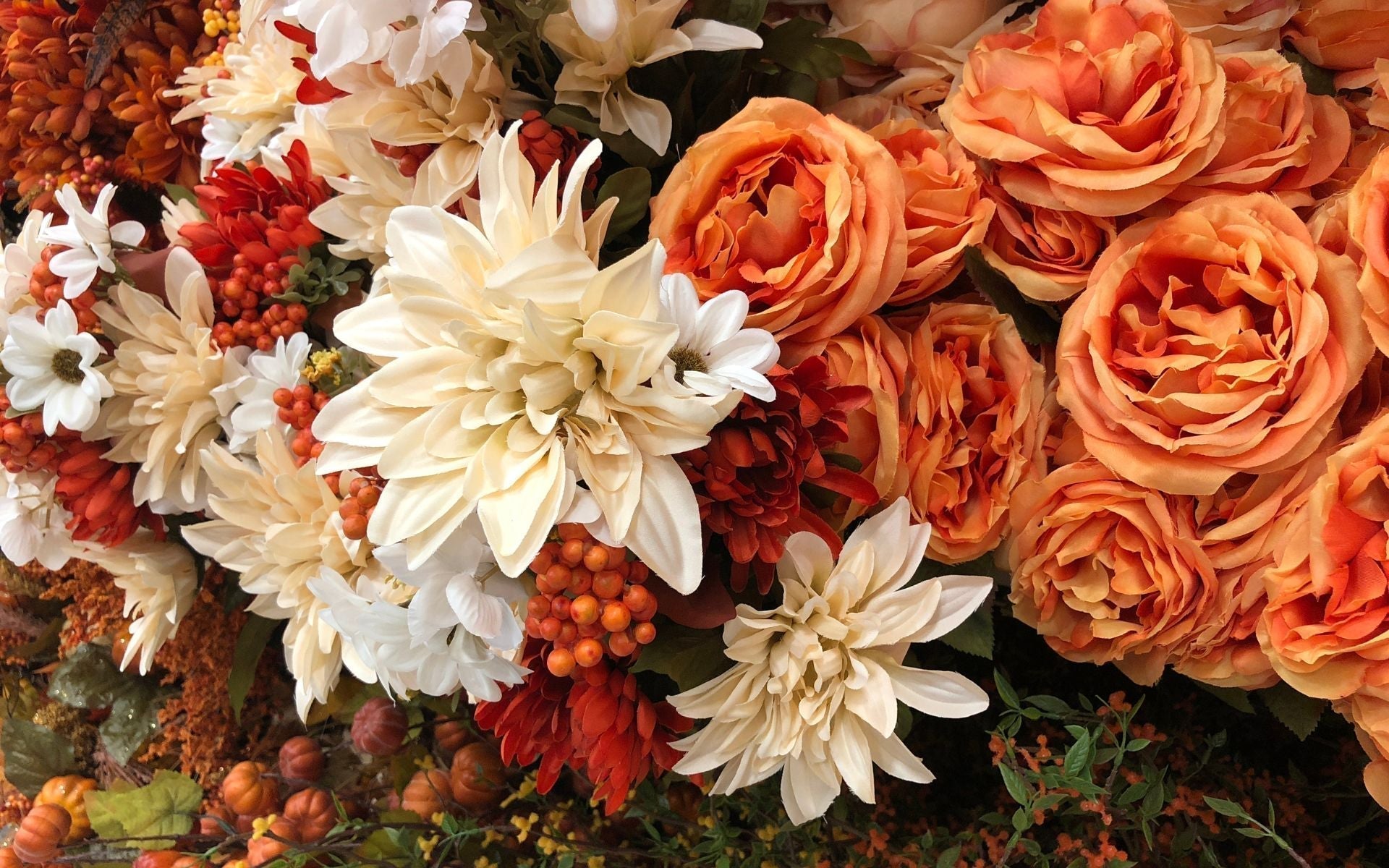
September always arrives with a slight change in the light. Mornings turn softer, evenings shorten by a few minutes each week, and something in a room starts quietly asking for warmer colour than it did in August. This is precisely the moment autumn flowers exist for.
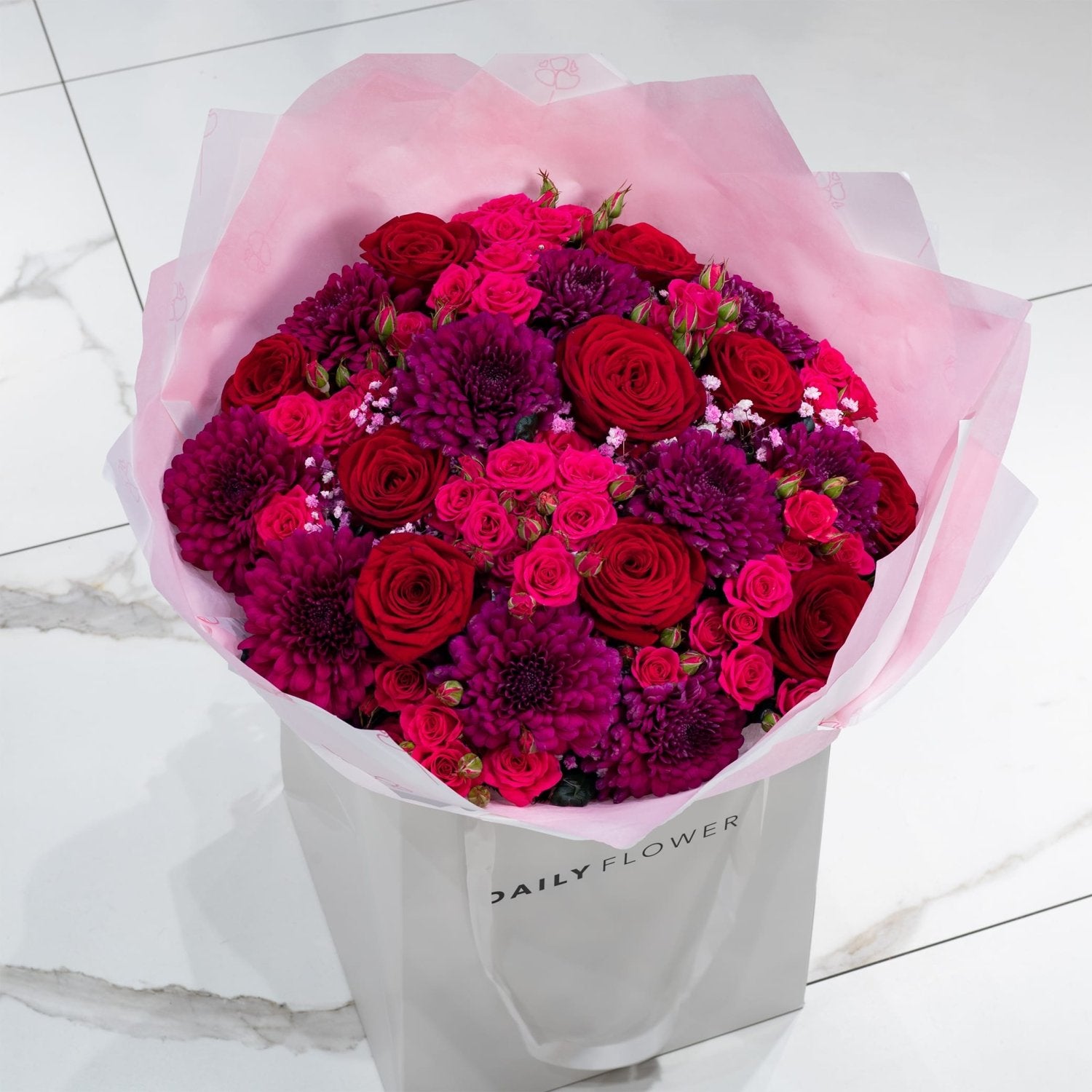
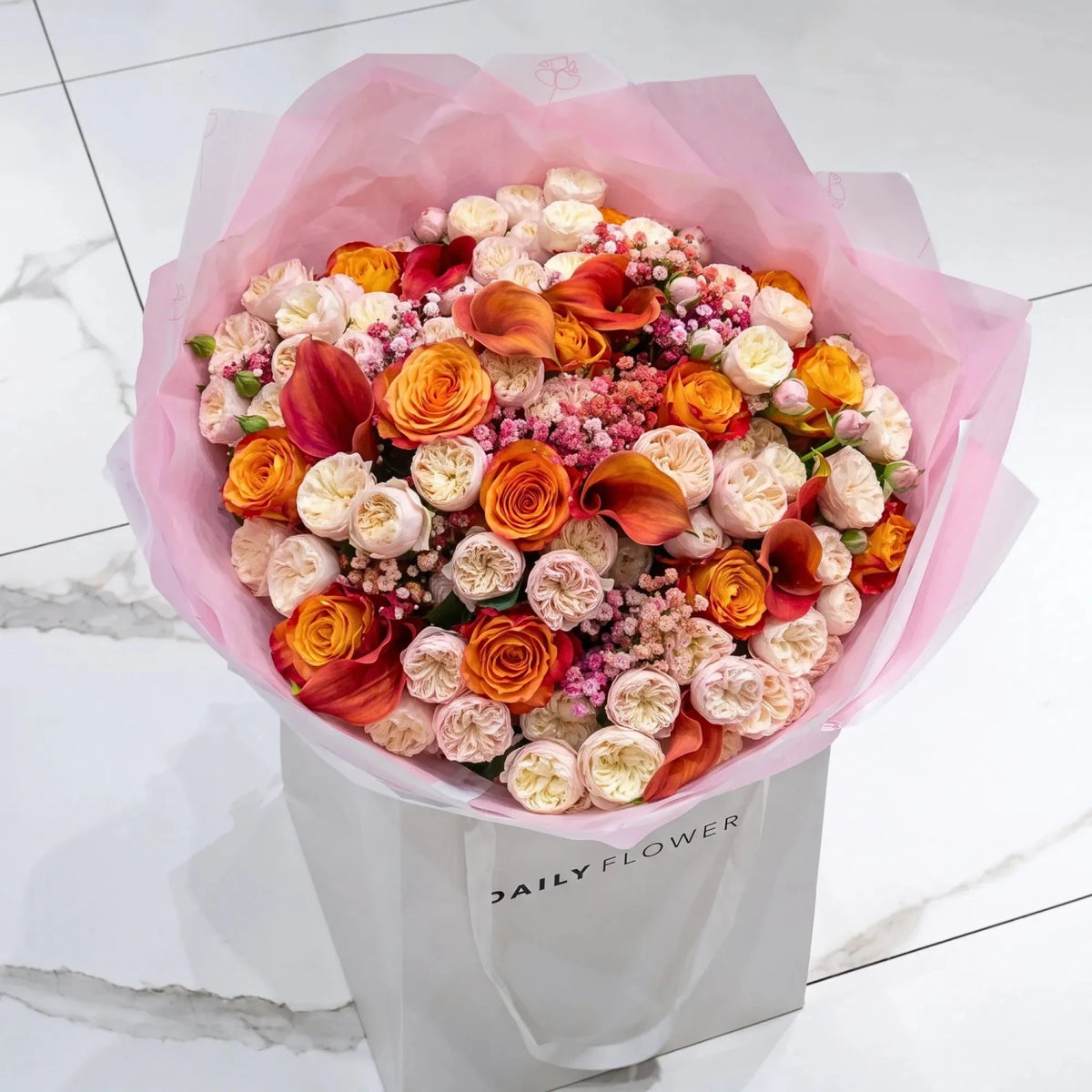
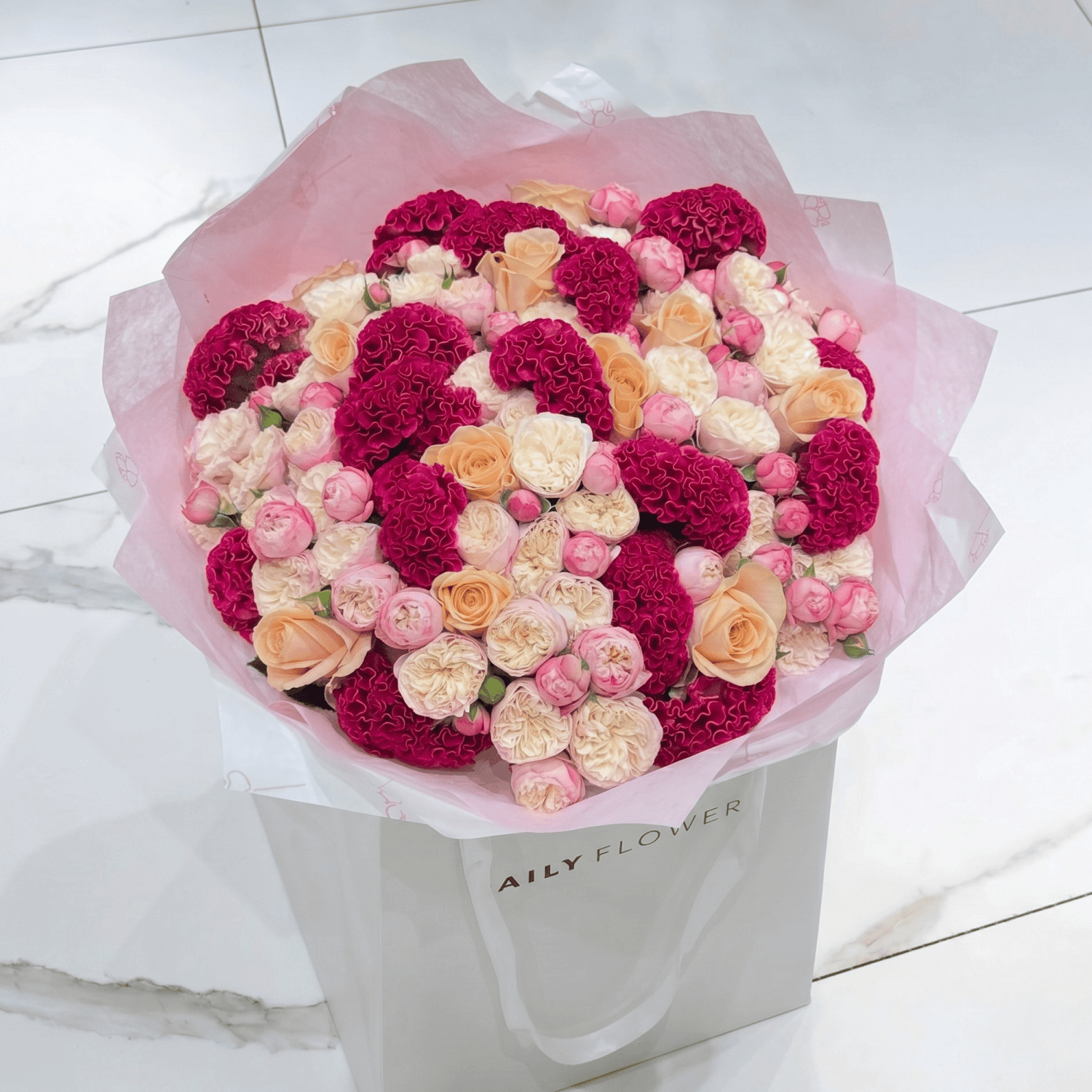
Autumn bouquets pull toward a specific range, and it is remarkably consistent year after year: deep burgundy, warm rust, soft ochre, dusty rose, and every gradation of gold between them. These are not loud colours. They read as warmth rather than brightness, which is exactly why they work in a season when we spend more time indoors and the daylight coming through a window has already lost some of its edge.
The temptation each autumn is to reach for the same reliable palette, but the more interesting arrangements always sit slightly off centre. A bouquet of deep reds becomes far more alive with a single stem of something unexpected: a chocolate brown seedhead, an almost bruised purple, or a pale, faded green that stops the whole thing from turning heavy.
Dahlias lead the season, and deservedly so. They arrive in enormous variety, from tight ball shapes to loose open petals, and they hold colour beautifully. This is genuinely their peak moment, and a bouquet built around them looks generous in a way few other autumn flowers manage.
Chrysanthemums have quietly become one of the most versatile autumn flowers available, having shed most of their old reputation as something rather dated. In their less familiar shades, rust, bronze, deep plum, they look nothing like the ones people remember from decades ago.
Sunflowers are usually filed under summer, but they belong in autumn just as naturally. Their deep gold reads completely differently against warm reds and browns than it does against the bright greens of July.
Then there are the details that make an autumn arrangement feel like autumn rather than simply a bouquet in warm colours: seedheads, berried branches, and the small papery lanterns that appear on stems this time of year. These add texture rather than colour, and texture is what separates a seasonal bouquet from a generic one.
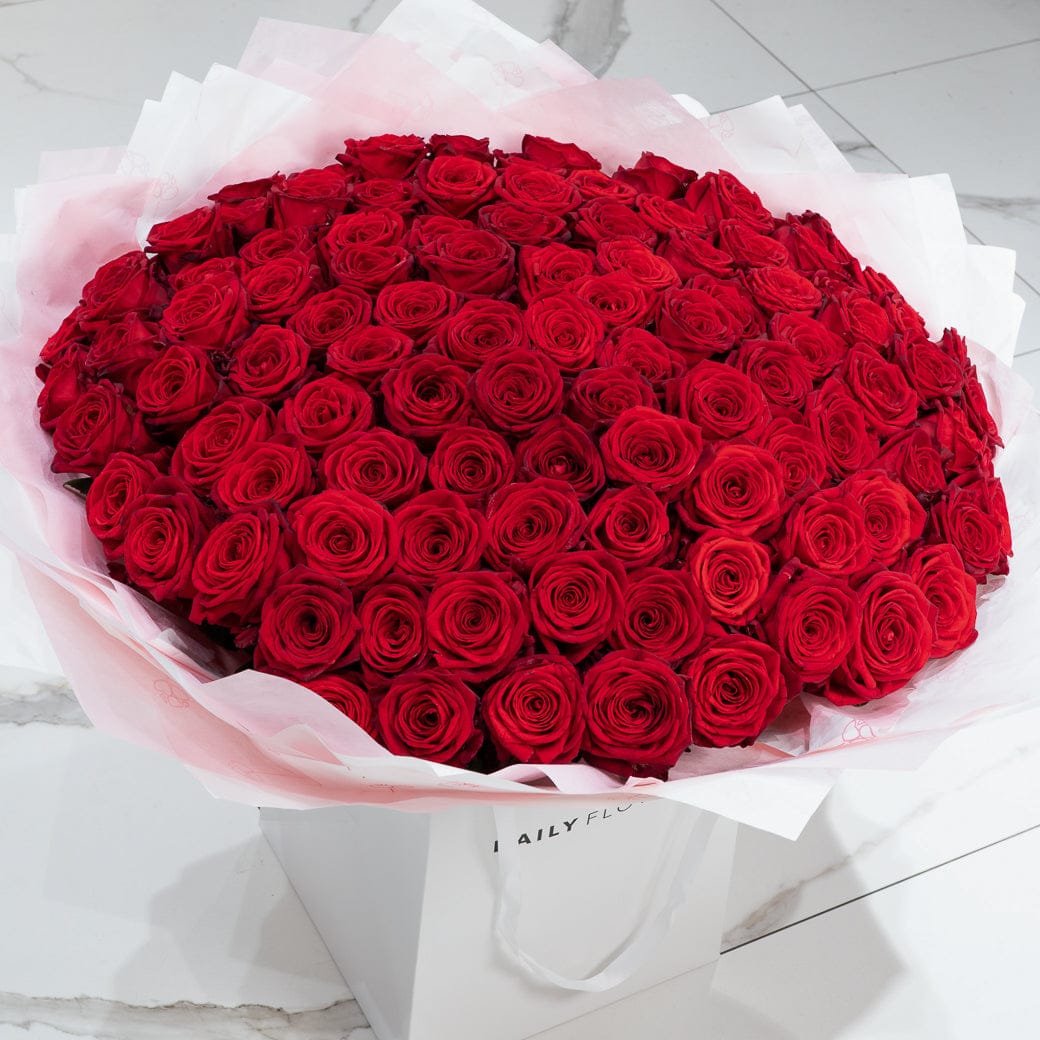
Roses have their place here too, though they behave differently in autumn than they do in February. Against rust and bronze, a deep red rose stops reading as romantic shorthand and starts looking almost architectural, which is a far more interesting job for it to be doing.
There is a clear pull toward abundance this autumn. Rather than several small arrangements scattered through a home, more people are choosing one substantial bouquet and giving it a proper place, usually somewhere it will be seen constantly rather than admired occasionally.
We think that instinct is right. Autumn light flatters volume. A full, layered bouquet in warm tones does something to a room in October that three small vases simply cannot, and it earns its place every single time you walk past it.
Placement matters more than people expect. Autumn bouquets look best where the light hits them from the side rather than head on, which usually means near a window but not directly in front of one. Against a darker wall, warm tones deepen rather than fade, and the whole arrangement holds together in a way it never quite does in a bright, evenly lit corner.
Autumn stems generally reward a little attention. Cut them at an angle, change the water every two or three days rather than topping it up, and keep the arrangement away from radiators and direct afternoon sun, both of which shorten a bouquet's life faster than anything else at this time of year.
Dahlias in particular drink heavily, so check the water level more often than feels necessary. It is the single easiest thing you can do to add days to a bouquet. Removing any leaves that sit below the waterline helps too, since those are usually what turns the water cloudy and shortens everything else in the vase along with it.
Autumn is the quietest good season for flowers. Spring gets the attention, summer gets the volume, but autumn produces the colours that make a home feel like somewhere you want to stay in rather than somewhere you are passing through. It is also the season that asks least of you. Nothing here needs forcing, because the flowers arriving now are already doing exactly what the light wants them to do.
That feels worth marking, on an ordinary table, on an ordinary week, well before anyone starts thinking about the holidays.
Autumn asks very little of anyone. That is rather the point of it.
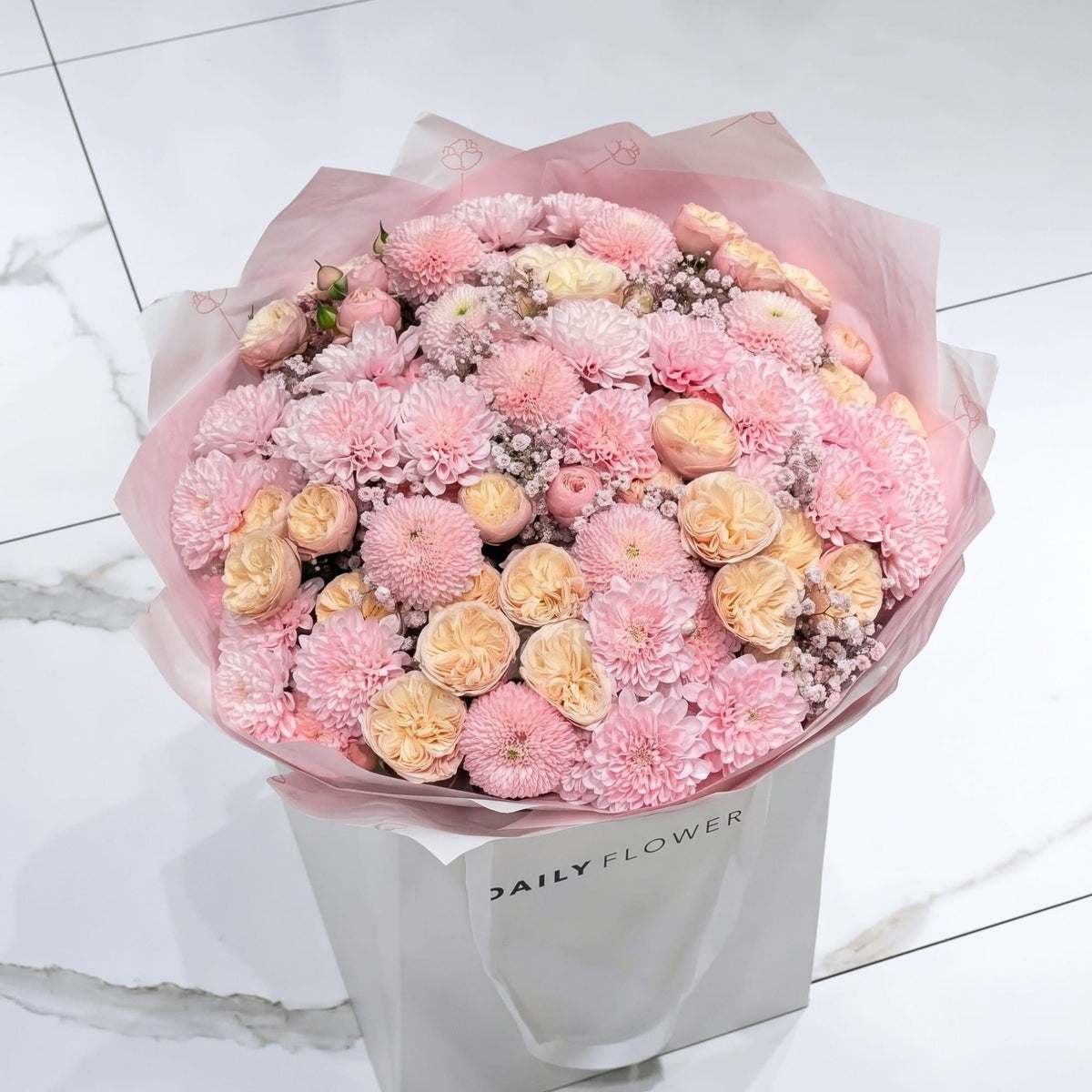
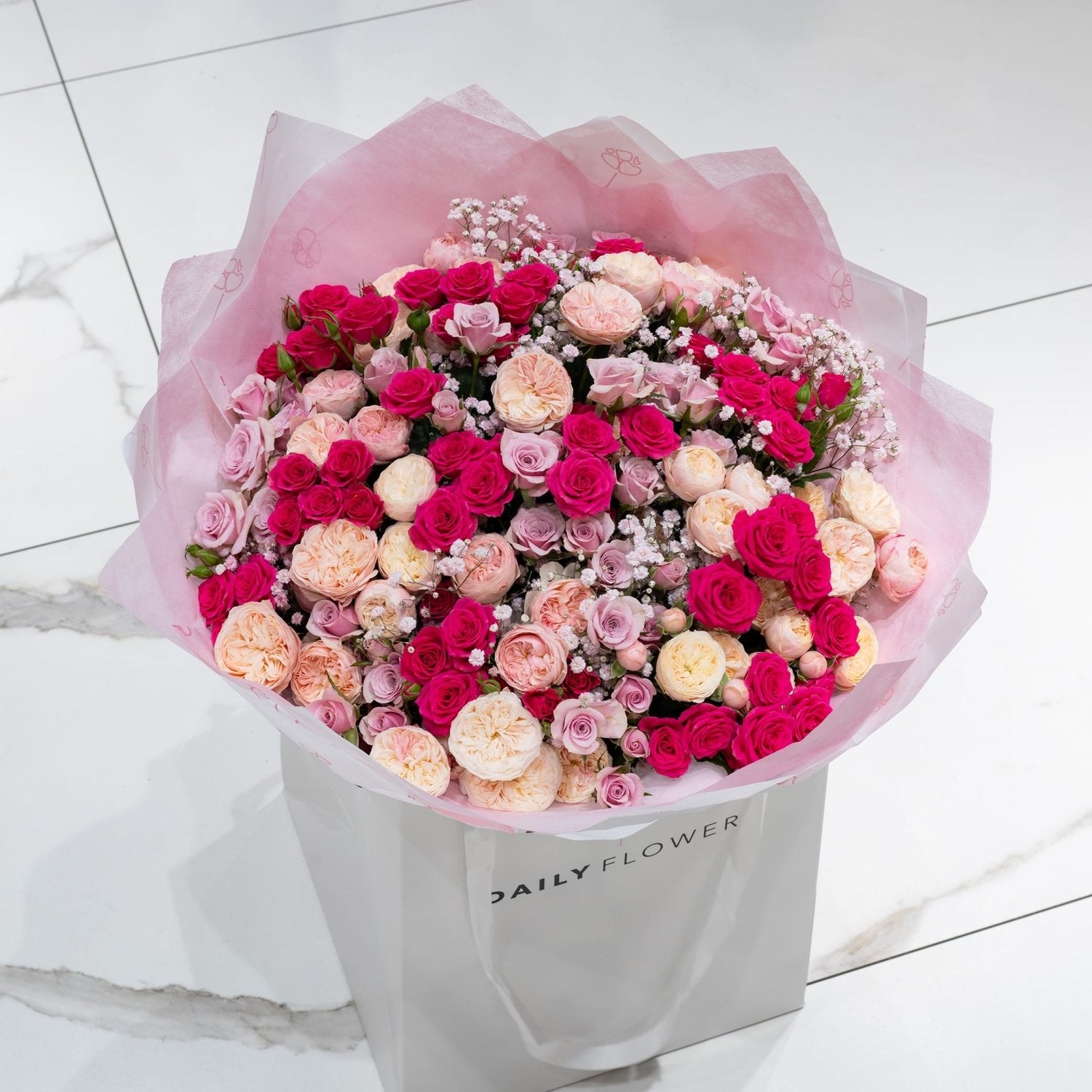
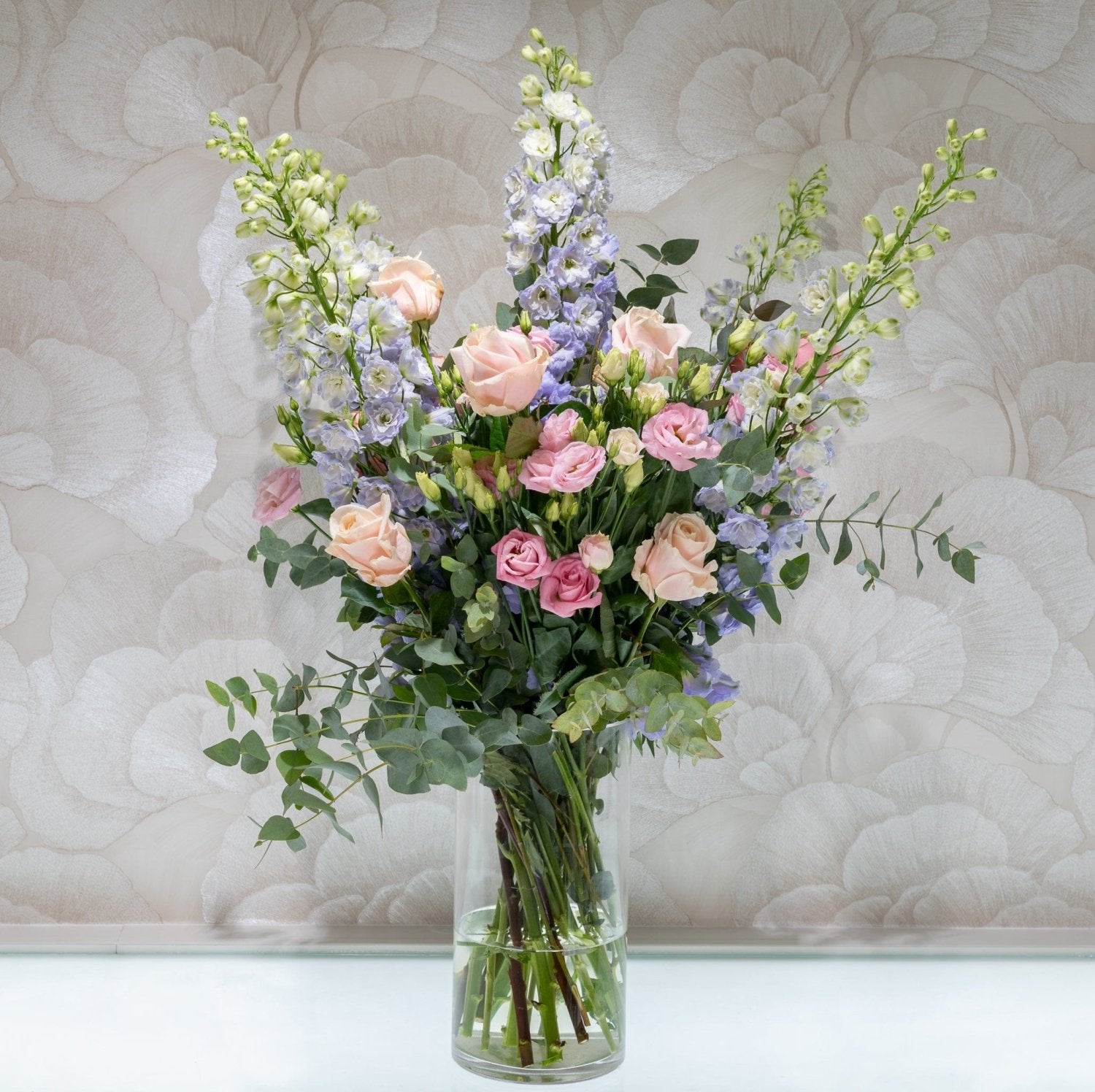
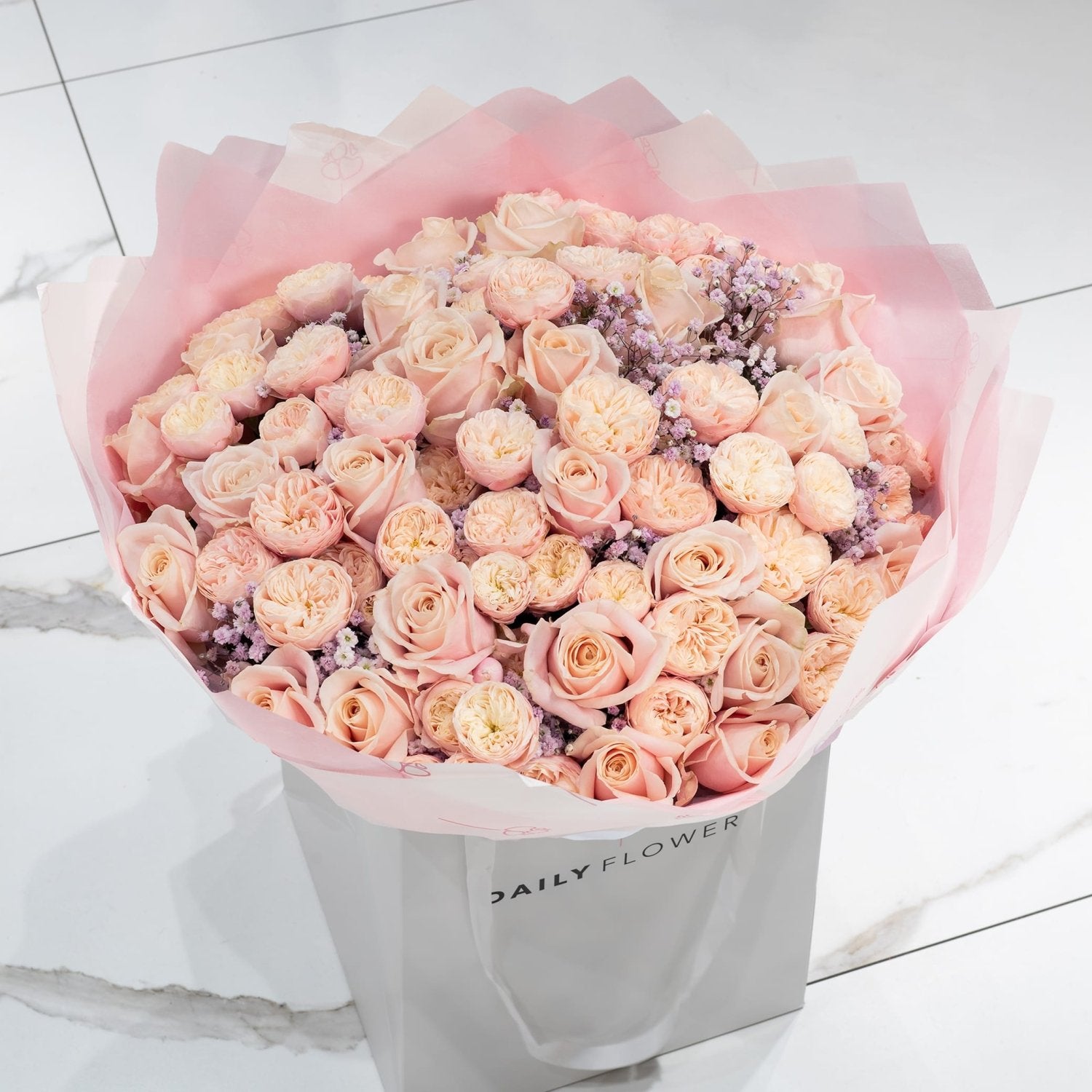
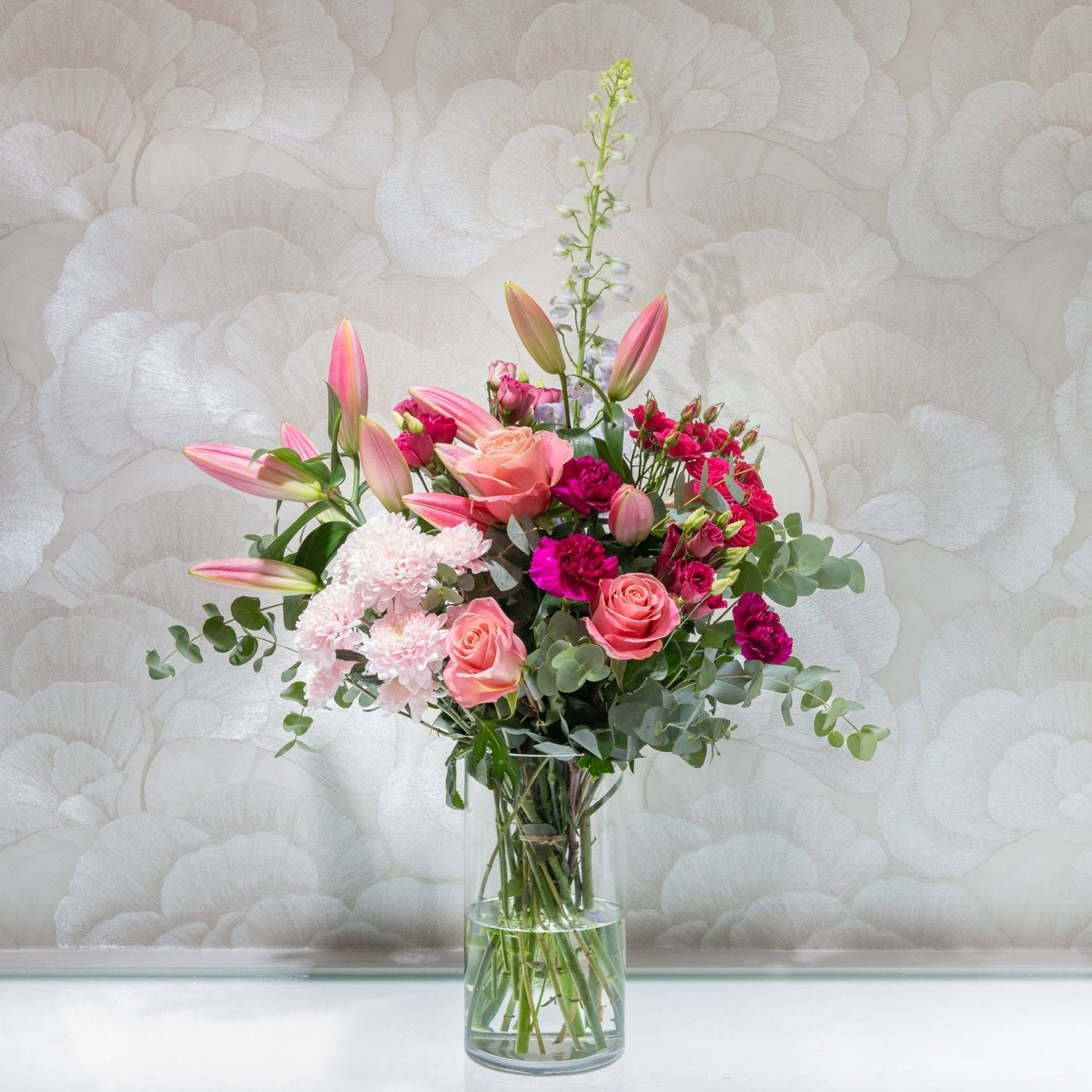
Discover our autumn bouquets, built around the season's warmest colours and made to hold a room together through the darker evenings ahead.
Share:
The World Championship of Floristry Is Happening Right Now
Autumn Wedding Flowers: the season's colour story